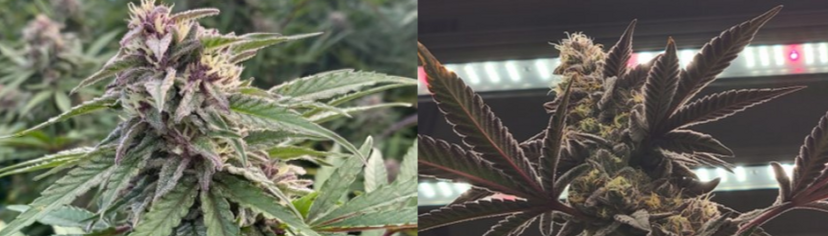
ANJA Presents: Understanding Indicas and Sativas
Ashley Robins · May 15, 2023

Welcome back to ANJA's blog, your trusted guide in the cannabis landscape. Today, we're debunking myths and uncovering truths about cannabis categorizations, particularly sativa, and indica. In light of recent research, these classifications seem less accurate than initially believed. Instead, the focus should shift to understanding the cannabinoid and terpene composition of each strain to ascertain its effects.
Overview:
Cannabis, a multifaceted plant with a myriad of compounds, is most famously represented by the Cannabis sativa and Cannabis indica strains. Over time, these strains have evolved distinct characteristics, leading to differing effects upon consumption.
Often, sativa strains are popularly associated with daytime use. Indica strains, conversely, are often chosen for evening use and for winding down after a long day. However, the secret behind these differing effects lies within each strain's unique blend of cannabinoids and terpenes.
Cannabinoids and Terpenes:
Cannabinoids, chemical compounds in cannabis, interact with our endocannabinoid system. The most renowned cannabinoids are THC (tetrahydrocannabinol), which induces the psychoactive "high," and CBD (cannabidiol), which does not produce the intoxicating psychoactive high.
According to cannabis legend, both sativa and indica strains contain these cannabinoids, just in varying proportions. Sativa strains often have a higher THC content, while indica strains usually boast balanced THC and CBD levels.
Terpenes- aromatic compounds that provide unique scents and flavors to cannabis strains- interact with cannabinoids, enhancing or altering their effects: a phenomenon termed the "entourage effect." For instance, the terpene myrcene is often found in indica strains and contributes to their aroma and character.
Factors outside of Cannabinoids:
The experience and strength of a cannabis strain can be influenced by various factors, from growing conditions and cultivation techniques to the style of the final product. Here's a closer look at some of these influencing factors:
Growing Conditions: The quality and characteristics of a cannabis strain can be significantly influenced by the conditions in which it was grown. Factors such as lighting, temperature, humidity, and the quality of the soil or growth medium can all affect the plant's development.
Cultivation Techniques: Different cultivation techniques can also affect the potency and characteristics of a cannabis strain. For instance, the use of organic fertilizers may result in a different terpene profile compared to synthetic fertilizers. Techniques such as topping or low-stress training can also impact the plant's growth and the quality of its buds.
Harvest Time: The time at which the cannabis plant is harvested can significantly affect the potency and effects of a strain. If harvested too early, the plant may not have reached its full potential in terms of cannabinoid and terpene production. Conversely, if harvested too late, some of the THC may have converted to CBN, another cannabinoid found in cannabis.
Individual Factors: Finally, the strength and experience of a cannabis strain can also be influenced by individual factors such as a person's metabolism, tolerance, and endocannabinoid system. What might be a potent strain for one person might not be as strong for another due to these individual differences.
Because growing conditions have such a monumental impact on the quality and reliability of cannabis products, ANJA takes significant care to only source from the best and most sustainable NJ cultivators and manufacturers. Your experience should be as reliable as it is unique- and we are here to make that happen.
Indicas and Sativas: Under Fire
Lately, the traditional sativa and indica classifications have been under scrutiny. Recent research, including a study by Dalhousie University and Bedrocan International, suggests that strains labeled as indica or sativa are often more similar than different. The study also revealed inconsistencies in strain names, indicating that these names and indica-sativa labels may not be the best predictors of a strain's effects.
This revelation suggests that as the legal cannabis industry grows, it's paramount to refine the labeling of cannabis strains and improve the accuracy of communicating their effects. Mislabeling can lead to user frustration and an experience that doesn't match expectations, particularly for consumers who rely on specific strains. It's essential to look beyond the traditional categories of sativa and indica, focusing instead on the specific cannabinoid and terpene profiles of a strain. This information offers a more reliable guide to understanding a strain's potential effects.
In conclusion, the stringent categorization of cannabis strains as either indica or sativa may not consistently predict their effects accurately. A better approach lies in understanding the specific concentrations of cannabinoids and terpenes in a strain. This empirical approach equips consumers with the knowledge to make informed choices about their cannabis use. So, stay curious, explore various strains, and relish the journey of discovering your unique relationship with cannabis.
A Quick Guide to Common Cannabinoid Effects:
Cannabinoids are the primary active compounds found in cannabis and are primarily responsible for its various effects. Please note that research, while promising, is still in its early stage and has room for growth and change. That being said, here's a brief guide categorizing some of the most common cannabinoids based on their effects:
THC (Tetrahydrocannabinol): This is the most well-known cannabinoid and the one primarily responsible for the psychoactive effects, or "high," associated with cannabis. THC is the primary psychoactive compound in cannabis. It is also one of the cannabinoids that researchers continue to study. Too much THC, however, can feel overwhelming for some - hence why it is important to start with a lower dosage and experiment from there.
CBD (Cannabidiol): CBD is a non-psychoactive cannabinoid that continues to be a subject of scientific research. It can help to counteract some of the psychoactive effects of THC. CBD continues to be a subject of scientific research. Interestingly, CBD can increase eye pressure, making products high in CBD not best-suited for those with glaucoma. On the other hand, CBG can decrease eye pressure, making strains high in CBG good options for glaucoma patients.
CBG (Cannabigerol): CBG is a non-psychoactive cannabinoid that is present in low quantities in most cannabis strains. However, it's increasingly becoming a subject of scientific research. CBG is a cannabinoid that researchers continue to study.
CBN (Cannabinol): CBN is a mildly psychoactive cannabinoid that is created when THC degrades. Although it's less potent than THC, CBN is a cannabinoid that researchers continue to study.
CBC (Cannabichromene): CBC is a non-psychoactive cannabinoid that is less well-known but shows promise in preliminary research. It is still being studied, and research is in the early stages, so the evidence may change with future discovery.
A Quick Guide to Common Terpene Effects:
Strains with terpenes such as pinene, limonene, and terpinolene are often chosen for daytime use.
On the other hand, strains with balanced THC and CBD levels, complemented by terpenes like myrcene, linalool, and caryophyllene, are popular for evenings.
Remember, your personal body chemistry, tolerance, and the specific chemical profile of the strain can significantly influence your experience. Always start with small doses, gradually increasing until you find your sweet spot. To help you along, here's a brief, non-exhaustive guide to the terpenes to look for based on your desired experiences:
For Daytime Use:
Pinene: Associated with alertness and memory retention, pinene has a pine-like aroma. It's commonly found in strains like Jack Herer and Blue Dream.
Limonene: Limonene has a citrusy scent and a bright, fresh aroma. It's often found in strains like Super Lemon Haze and Tangie.
Terpinolene: With a complex aroma of citrus, floral, and herbs, terpinolene is typically found in sativa-dominant strains. Look for strains like Ghost Train Haze and Golden Goat.
For Evening Use:
Myrcene: Myrcene has an earthy, herbal aroma. It's often found in strains like Granddaddy Purple and Northern Lights.
Linalool: Linalool has a floral scent reminiscent of lavender. It can be found in strains like Lavender and Amnesia Haze.
Caryophyllene: With a spicy, peppery aroma, caryophyllene is one of the terpenes researchers continue to study. Strains like Skywalker OG and Bubba Kush typically contain caryophyllene.
Please note that these recommendations are based on common terpene associations and individual experiences may vary. It's essential to explore different strains and terpene profiles to discover what suits you best. Remember, the effects of terpenes can be influenced by other factors, such as the presence of other cannabinoids in the strain. We are here to help you on your journey; when you have questions, we have ANJA.
This article is general education for adults 21 and older. It is not medical advice, and cannabis affects everyone differently.
Ready to shop?
Delivery, drive-up pickup, or in-store in Highland Park.